

Raising healthy calves starts with consistency, hygiene, and the right feeding routine from day one. Over the years, we’ve worked with dairy and livestock farmers across the UK who want practical solutions that improve calf growth while keeping labour manageable during busy periods. Whether you rear a handful of calves or manage a larger operation with automated systems, investing in reliable calf feeding equipment can make a considerable difference to performance and daily efficiency.
Good feeding equipment does far more than simply deliver milk. It supports calf health, helps maintain accurate feeding rates, reduces waste, and lowers the risk of contamination. At the same time, quality equipment gives farmers confidence that calves are receiving the correct nutrition throughout every stage of development. Combined with high-performing calf milk replacers and technical support, the right setup creates stronger foundations for growth and long-term herd performance.
As one of the UK’s largest calf milk powder suppliers, we understand how important practical feeding systems are on modern farms. Our experience working directly with farmers means we regularly see how the right calf milk feeding equipment improves consistency, especially during peak calving seasons when workloads increase sharply.
Calf Feed Buckets and Teat Feeders
One of the most widely used pieces of calf feeding equipment remains the traditional feed bucket and teat system. Although simple, these products are still highly effective when used correctly. Feed buckets allow calves to consume milk at a natural pace, while teat feeders encourage proper sucking behaviour, which can support digestion and overall calf comfort during feeding.
Durability matters when selecting buckets and teats because feeding equipment faces heavy daily use. Strong materials that are easy to clean help reduce bacteria build-up and maintain hygiene standards. Many farmers also prefer graduated buckets with clear measurements to ensure accurate milk mixing and feeding volumes throughout the rearing period.
Teat design is equally important. A well-designed teat provides steady milk flow without encouraging calves to drink too quickly. This helps reduce digestive upset and supports healthier growth rates. Farmers who regularly monitor teat condition and replace worn components often report fewer feeding problems and improved calf consistency across groups.
Milk Mixing Equipment for Accurate Feeding
Consistent milk preparation is one of the biggest factors in successful calf rearing. Poorly mixed milk replacer can lead to uneven nutrient intake and unnecessary digestive issues. Reliable calf milk feeding equipment should therefore include proper milk mixers or whisks that allow powders to dissolve fully without clumping.
Many modern farms now use electric mixers to improve speed and consistency during feeding rounds. These systems are particularly useful on larger units where multiple calves require feeding several times each day. Accurate mixing temperatures are also essential because overheating milk replacer can damage protein quality, while cold mixtures may reduce intake.
At Britmilk, we supply calf milk replacers formulated for strong performance and efficient mixing, including products developed using 100% dairy protein formulations. Proper mixing equipment allows farmers to get the best value and nutritional performance from these feeds while reducing unnecessary waste.
Mobile Milk Trolleys and Feeding Carts
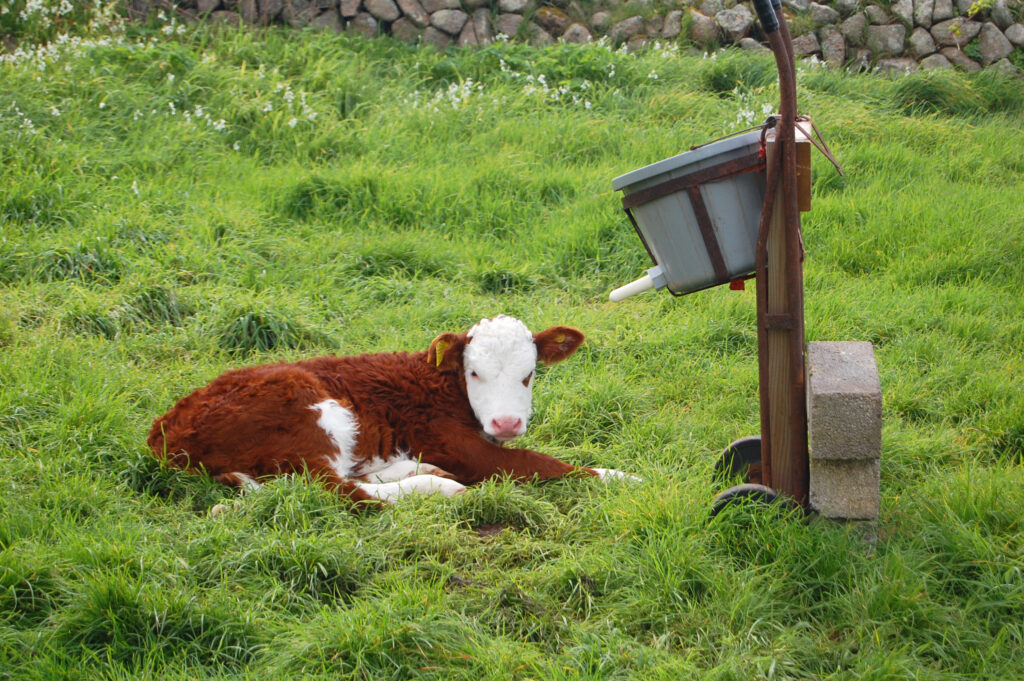
For farms feeding larger numbers of calves, milk trolleys and feeding carts are often one of the most valuable investments. Carrying buckets by hand across calf sheds quickly becomes time-consuming and physically demanding, particularly during spring calving periods when workloads increase substantially.
Mobile feeding carts allow larger milk volumes to be transported safely and efficiently around the yard. Many systems include integrated mixers, accurate temperature controls, and multiple feeding outlets to speed up the feeding process without sacrificing consistency. This can help farmers maintain feeding routines even during busy periods or staff shortages.
A practical feeding trolley also improves workplace safety by reducing heavy lifting and spillages. Farms with longer distances between preparation areas and calf housing often notice considerable time savings after introducing wheeled feeding systems. As trusted calf feeding equipment suppliers, we regularly advise farmers on selecting equipment suited to herd size and feeding frequency rather than simply choosing the largest system available.
Automatic Calf Feeders
Automatic feeders have become increasingly popular on progressive dairy and calf-rearing units. These systems provide calves with smaller, more frequent feeds throughout the day, helping create stable feeding patterns that more closely mirror natural behaviour.
One of the major benefits of automatic calf feeding equipment is the ability to monitor individual calf intake. Many systems track drinking behaviour, feeding speed, and daily consumption, helping farmers identify potential health concerns earlier. Reduced milk intake is often one of the first signs that a calf may require attention.
While automated systems require higher initial investment, many farmers find the labour savings and feeding accuracy worthwhile over time. Maintaining consistency in feeding routines is strongly linked with improved calf performance and reduced health setbacks. Properly maintained automatic systems can support this consistency effectively across larger groups of calves.
Hygiene Equipment and Cleaning Systems
Even the best milk replacer and feeding routine can be undermined by poor hygiene. Feeding equipment must be thoroughly cleaned after every use to reduce bacterial contamination and minimise disease pressure within calf housing.
Essential cleaning tools include dedicated brushes, sterilising solutions, drying racks, and hot water systems. Farmers should pay close attention to teats, valves, pipes, and mixing equipment, as these areas can easily retain milk residue if cleaning routines are rushed. Regular sanitising supports healthier calves and can help reduce common digestive problems associated with contaminated feeding equipment. Maintaining clean calf feeding equipment forms a key part of this wider approach to herd health and disease prevention.
Choosing Reliable Calf Feeding Equipment Suppliers
Finding dependable calf feeding equipment suppliers is just as important as selecting the equipment itself. Farmers benefit most when suppliers understand livestock nutrition, calf management, and the practical realities of life on a working farm.
We work closely with customers across England, Scotland, Wales, and Northern Ireland to provide feeding solutions suited to individual systems and herd requirements. Alongside supplying calf milk replacers, colostrum products, supplements, and calf accessories, we also offer practical technical support based on direct farm experience.
Every farm operates differently, which is why feeding equipment should always be chosen with calf numbers, labour availability, housing design, and feeding goals in mind. Reliable equipment helps farmers maintain consistency, improve hygiene standards, and support stronger calf performance from the earliest stages of life.